2026 Agenda
09:00 - 09:05
Welcome from Campaign


09:05 - 09:35
Keynote: From Shadow to Center Stage
It wasn’t long ago that corporate advertising departments operated in the shadows—a group of “creatives” in jeans and on Macs, tucked away somewhere producing below-the-line work their external counterparts neither craved nor credited. Fast forward, and in-house agencies are perpetually making headlines, delivering high-visibility work and generating undeniable value that far exceeds their former scope and stage. In this compelling keynote, we’ll explore how in-house agencies and corporate creative teams continue to break through—powered by essential industry data, emerging trends, and key imperatives today’s leaders need to elevate the impact of their organizations.

09:35 - 09:55
Presentation: By the Numbers: The Forces Reshaping Advertising and What They Mean for In-Housing
The in-housing conversation has no shortage of opinions. What it often lacks is data. In this 20-minute session, Greg McLelland, Global CRO & Practice Lead for industry data specialists Madison and Wall, brings the numbers — and the analysis — that put the in-housing movement in its proper economic context.

09:55 - 10:15
Beyond the Pilot - An AI transformation playbook for our in-house partners
Marketers aren’t short on tools—they’re drowning in them. The real challenge is turning AI ambition into a system that actually delivers. In this session, we’ll show how to break out of the pilot trap and build an end-to-end marketing operating model powered by AI, automation, and connected intelligence. From scaling content exponentially to designing workflows that move at the speed of culture, you’ll leave with a practical, proven roadmap to transform how your organization works—and wins.
Sponsor session

10:15 - 10:45
Panel: How can in-house creative teams keep up in the AI arms race
The big agencies around the world are racing to invest in and build out their own AI operating systems and expertise. Where does that leave the in-house creative teams without the budget to spend big on AI.



11:05 - 11:25
The Efficiency Illusion
In-housing promises speed, control and efficiency. But faster systems do not automatically create better marketing.
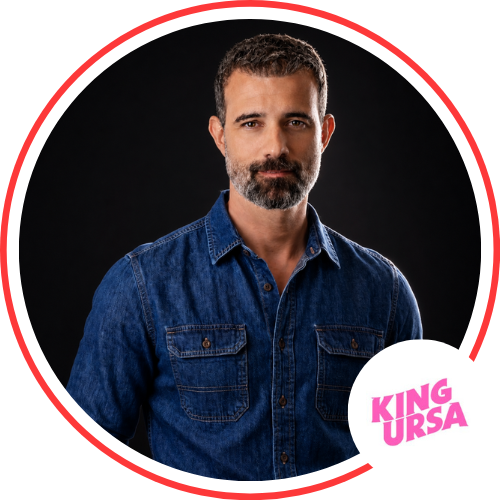
In this provocative session, Paulo Salomao, Founder, CEO of King Ursa, and Elysia Ravenscroft, VP Client Services, King Ursa challenge the industry’s obsession with where work gets done - and ask a more important question: Is the system around the work strong enough to make it effective?
A sharp, constructive conversation on over-execution, stretched brand teams, eroding marketing craft and why the next advantage will not come from doing more faster, but from building the judgment to do better.
Sponsor session

11:25 - 11:55
Panel: Follow the Money: The real reasons brands are in-housing their data and media
First-party data has become a genuine competitive asset — and brands are waking up to the cost of housing it externally. The technology barrier is falling, loyalty ecosystems are scaling, and the math is hard to ignore: studies show massive waste in programmatic, while owned customer data is powering smarter CRM, personalization, and media buying in ways third parties can't replicate. These aren't separate conversations. This panel brings together senior marketers to talk candidly about the business case, the measurement, and why owning your data — from customer engagement to media activation — has become almost inevitable.



11:55 - 12:25
Panel: Inside job? The case for bringing brand strategy in-house
Creative moved inside years ago. We’re seeing more media buying following. But brand strategy has mostly been viewed as the function that shouldn’t go there. Not any more—this panel explores what it takes to do it well, what you lose and gain when strategy moves inside.



12:25 - 12:55
Interview: Loblaw Agency: How it got here, and where is it going next
No in-house agencies in Canada have built what Loblaw has — a 120-person operation spanning design, packaging, national campaigns, experiential and media, all under one roof.
In this on-stage interview to close the morning, Julie Pacheco, VP of Loblaw Agency, pulls back the curtain on how the model actually works: the philosophy of creative bravery, how it manages speed and scale across Loblaw’s banners and brands, and how in-housing has evolved into a genuine competitive advantage. But Pacheco won't just be looking back. With Loblaw one of Canada's most sophisticated retail media networks — and a first-party data stack that is the envy of the market — the more important question is where the in-house model goes next. What does it mean when creative, media, data and strategy truly converge? And how is AI already reshaping the work, and the workforce, that makes it all possible?

12:55 - 13:00
Closing remarks